

By Dr. Waverly Eichhorst, Research Fellow, The Centre for Feed Innovation
Alternative ingredients appear in more than one-third of the United States (US) pet food products analyzed. This was a key finding from a recent report written by the Centre for Feed Innovation (CFI) in collaboration with the Pet Sustainability Coalition (PSC). CFI analyzed ingredient lists from 6,803 US dog and cat food products provided by KibbleLab. The analysis covered algal oil, algal protein, bacterial protein, black soldier fly larvae (BSFL), brown seaweed, cultivated meat, mycoprotein, red seaweed and yeast protein.
Usage varies considerably by ingredient, product type and manufacturer. Yeast protein appeared on nearly 1 in 5 dog and cat food labels, including products from several of the largest manufacturers, while red seaweed appeared only in cat food, mainly wet formats, from just 2 manufacturers. These uneven patterns raise practical questions for the pet food industry: Which products include them? What roles might they realistically serve in formulations? What can label data tell us about broader adoption trends?
Which alternative ingredients appear most often in US commercial products?
Yeast protein was the most frequently identified ingredient, appearing in 19.5% of assessed products. Brown seaweed, particularly kelp, appeared in 14.6% of products, followed by algal oil in 3.4%. Algal protein, BSFL, and red seaweed each appeared in fewer than 1% of products. Bacterial protein, mycoprotein, and cultivated meat were not identified in the dataset. Their absence may reflect US regulatory status or dataset limitations. Because the analysis covers only the products assessed, it cannot establish whether these ingredients appear in other products or markets.
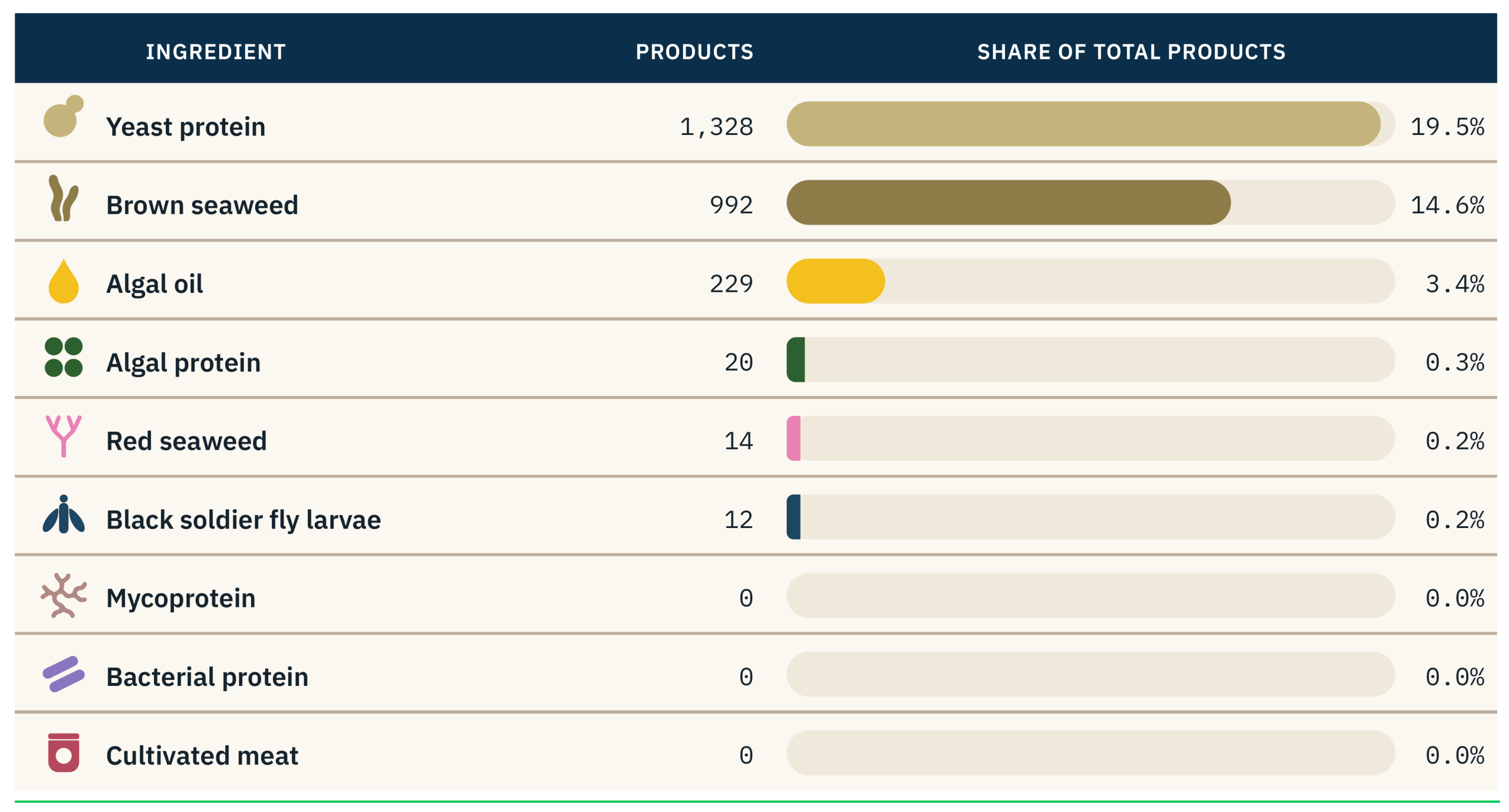
Figure 1. Prevalence of the nine assessed ingredients among 6,803 US dog and cat food products. Source: Alternative Ingredients in Pet Food: A Guide to Emerging Proteins and Oils in Dog and Cat Food, p. 74.
What do labels tell us about an ingredient’s role?
Ingredient labels show that an ingredient is present, but not why it was included or at what inclusion rate. Yeast protein and brown seaweed, for example, are commonly used for specific nutritional or functional properties rather than as major protein sources. Algal oil can provide omega-3 fatty acids at relatively low inclusion levels.
An ingredient’s position on the list offers a rough indication of its relative amount. Ingredients are generally listed in descending order by weight, so those nearer the beginning are present at higher inclusion levels than those appearing further down. However, position does not reveal an exact inclusion rate or establish an ingredient’s purpose.
Evidence of current use is only part of the picture. Production maturity, cost, evidence of nutritional performance, environmental impacts, and consumer acceptance also matter. Although an ingredient may already be used in pet food, broader adoption or higher inclusion levels may depend on manufacturers’ confidence in the ingredient’s value and their ability to secure a suitable supply at a workable cost.
Where are the ingredients being used?
The pet species and product types in which ingredients appear can help show where manufacturers have successfully integrated alternative ingredients into existing formulations. In the dataset, yeast protein and brown seaweed appeared predominantly in dry food. Algal protein was found most often in supplements, BSFL in treats, and red seaweed in wet cat food.
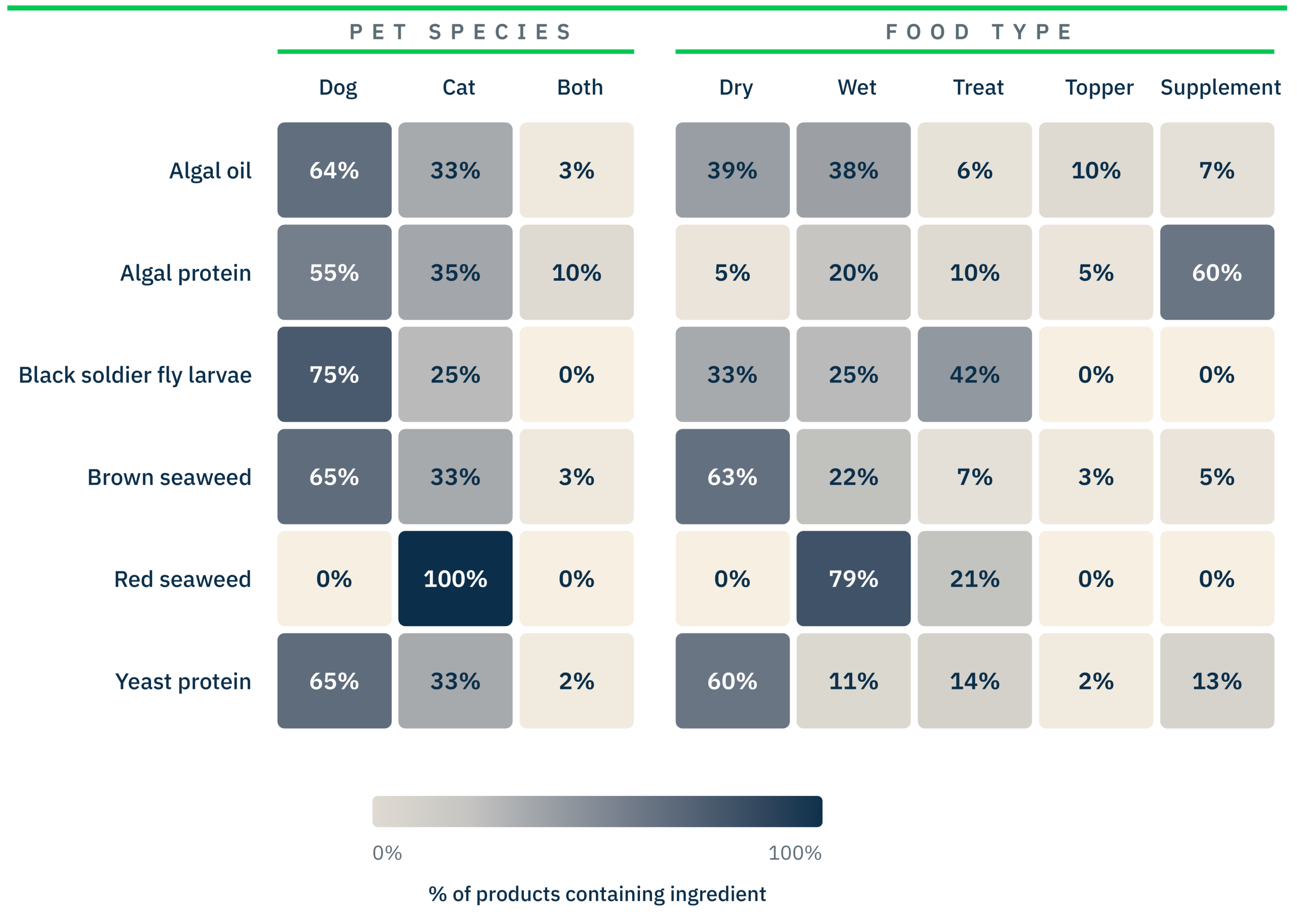
Figure 2. Pet species and food type applications of assessed alternative ingredients in US pet food products. Source: Alternative Ingredients in Pet Food: A Guide to Emerging Proteins and Oils in Dog and Cat Food, p. 75.
These patterns suggest that adoption of alternative ingredients is not uniform across product types. Some ingredients are already incorporated into conventional dry and wet food formats, while others appear more concentrated in specialized products such as treats and supplements. These examples can help identify where there is an existing formulation precedent and areas where further development may be needed.
CFI also analyzed ingredient use by linking products to their brands and manufacturers. Ingredients appearing across many manufacturers may indicate broader commercial uptake, while those concentrated among a few may reflect early adoption or more specialized applications.
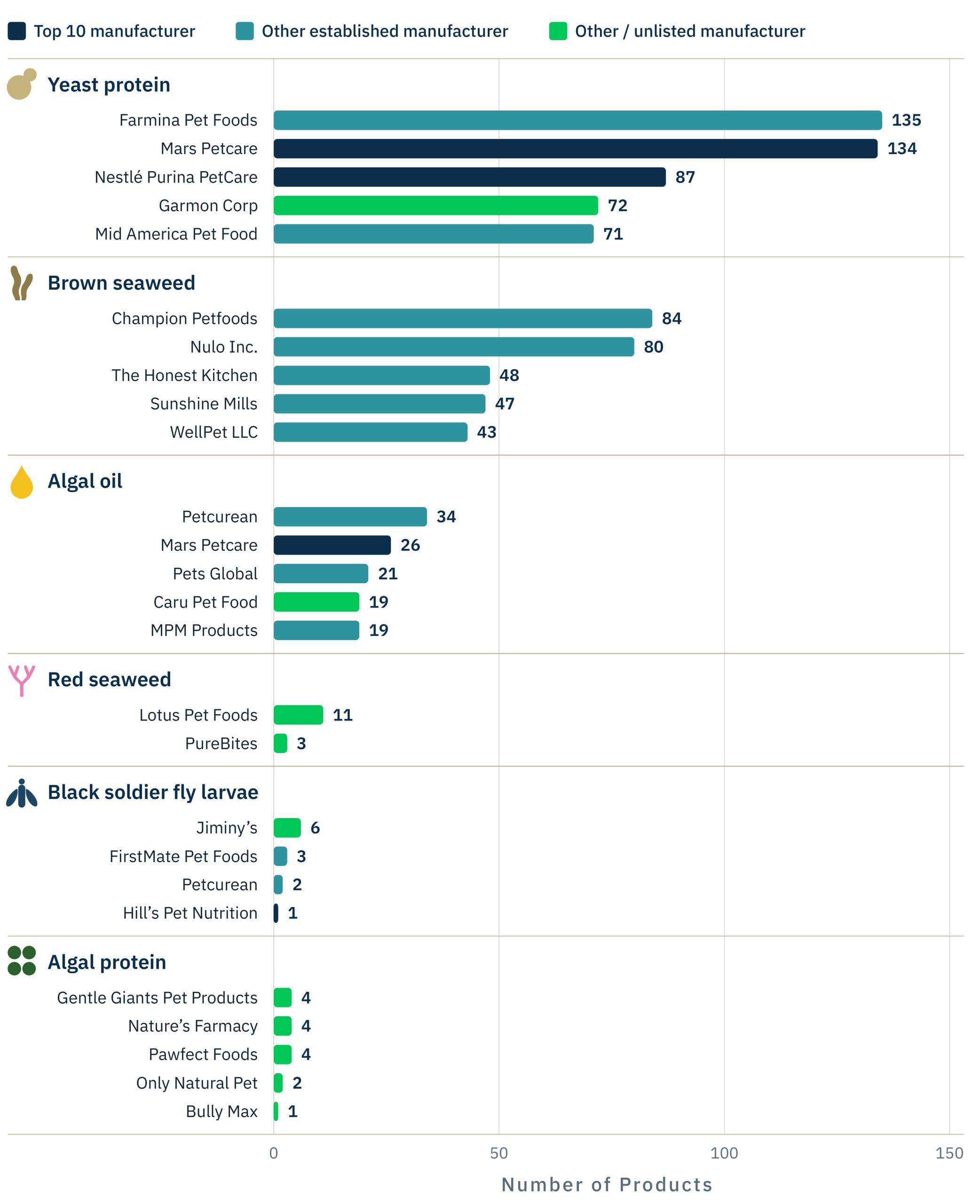
Figure 3. Top manufacturers using alternative ingredients in pet food in the US. Source: Alternative Ingredients in Pet Food: A Guide to Emerging Proteins and Oils in Dog and Cat Food, p. 77.
What the findings mean for product development
For the pet food industry, the KibbleLab analysis provides a market snapshot of which ingredients are visible on US pet food labels and in which product formats. It also highlights an important distinction: an ingredient’s presence in the market does not reveal its inclusion level, formulation role, or demand.
The findings also suggest different starting points for manufacturers evaluating alternative ingredients as primary protein or oil sources. CFI recommends prioritizing algal oil and yeast protein for near-term evaluation. Both have existing pet food applications and a comparatively established evidence base, although their suitability depends on the product and formulation.
Bacterial protein and mycoprotein warrant more selective evaluation, while algal protein, BSFL, brown seaweed, cultivated meat, and red seaweed remain ingredients to monitor as their supply and commercial applications develop. These recommendations address their potential as primary protein or oil sources, not their use in other formulation roles.
Combining product-level data with information on ingredient function, supplier capacity, cost and performance can help manufacturers decide where to focus formulation trials and supplier discussions.
Read CFI’s report, Alternative Ingredients in Pet Food: A Guide to Emerging Proteins and Oils in Dog and Cat Food, at feedinnovation.org/pet-food-report.
About the author: Dr. Waverly Eichhorst is a Research Fellow at The Centre for Feed Innovation (CFI), where she supports research and communications, translating scientific evidence and market developments into insights for industry, investors and policymakers. She co-authored CFI’s Alternative Ingredients in Pet Food report. Her background is in sustainable food systems and agricultural innovation, with previous roles at WWF, The Nature Conservancy, and the Breakthrough Institute. She holds a PhD in Environmental Studies from the University of Colorado Boulder.